Percent of adults who could not get medical care when needed due to cost
Measure Overview
Forgone care (i.e., skipping needed health care) can occur for a number of reasons: Distrust of the medical system, low perceived need to seek medical care, and, for many, unaffordable costs of health care.
Millions of Americans forgo care they need due to cost every year, which can lead to serious physical, emotional, and financial hardship as a result of missed or delayed diagnoses, worsened conditions, emergency hospitalizations, and other unforeseen circumstances. Given the potential risks associated with forgoing medical care, tracking data on this issue is a key step in understanding which populations are not getting the medical care they need due to cost barriers. This can also help to inform targeted research, programs, and outreach efforts to reduce forgone care.
Forgone Care Due to Cost by State, Coverage Type, and More: Breakdowns and Data Source
State Health Compare provides annual, state-level estimates of adults who could not get needed medical care due to cost using data from the Centers for Disease Control and Prevention’s (CDC) Behavioral Risk Factor Surveillance System (BRFSS) survey.
Five breakdowns are available for this measure: Chronic Disease Status, Coverage Type, Education, Race/Ethnicity, and Sexual Orientation.
Generate customized graphics using this data by selecting one of the options below.
Related Products
Unaffordable Health Care Costs: More U.S. Adults Forgo Care Due to Cost in 2024, Differences Seen by State, Insurance Coverage Type, Chronic Disease Status
Exploring trends in forgone care can help us understand how unaffordable health care costs impact the nation overall as well as different states, communities, and demographic groups. This blog will explore rates of forgone care due to cost over time, by state, and by subgroup using State Health Compare.
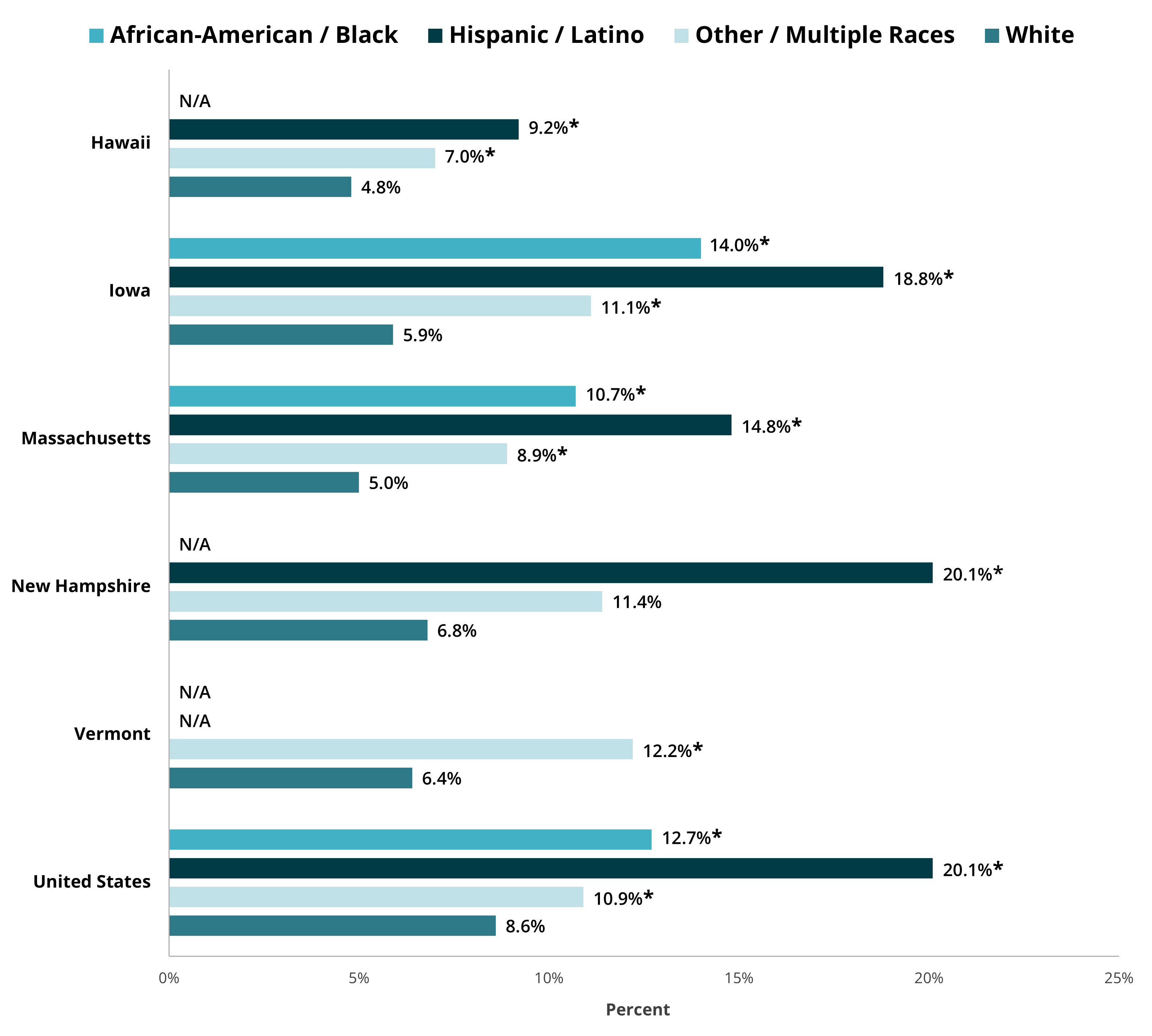
Exploring Racial Disparities in Forgone Health Care Using State Health Compare
In this blog post, we are going to explore racial disparities in forgone health care due to cost. Using SHADAC’s State Health Compare tool, we will examine forgone care data broken down by race and ethnicity. Then, we will explore racial disparities in forgone care at the state level.