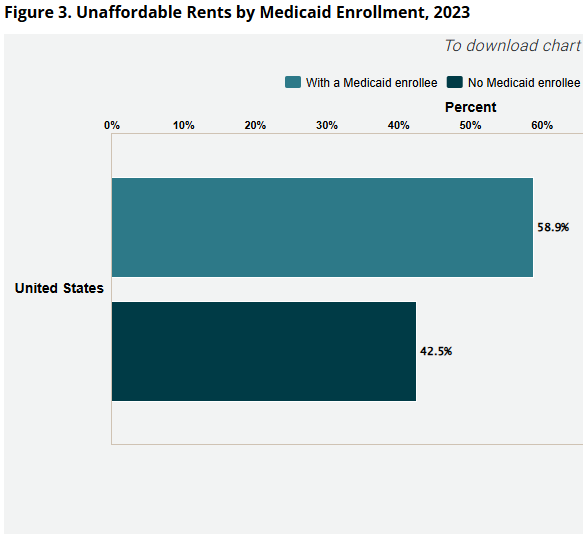
Percent of cost-burdened rental households
Measure Overview
Millions of Americans struggle to pay rent as U.S. housing costs continue to rise. This cost burden limits the amount of money that individuals can spend on other necessities, such as groceries, transportation, and health care services. Unaffordable rent prices can also cause psychological and emotional distress in individuals who must seek more affordable alternative housing, whether by choice or due to eviction. Understanding which populations are at increased risk of experiencing unaffordable rent can improve efforts to assist renters in securing and maintaining housing.
State Health Compare provides state-level data on unaffordable rents based on findings from the American Community Survey (ACS). The data are available across the following breakdowns: disability status, household income, Medicaid enrollment, metropolitan status, and race (white or non-white).
Generate customized graphics using this data by selecting one of the options below.
Related Products
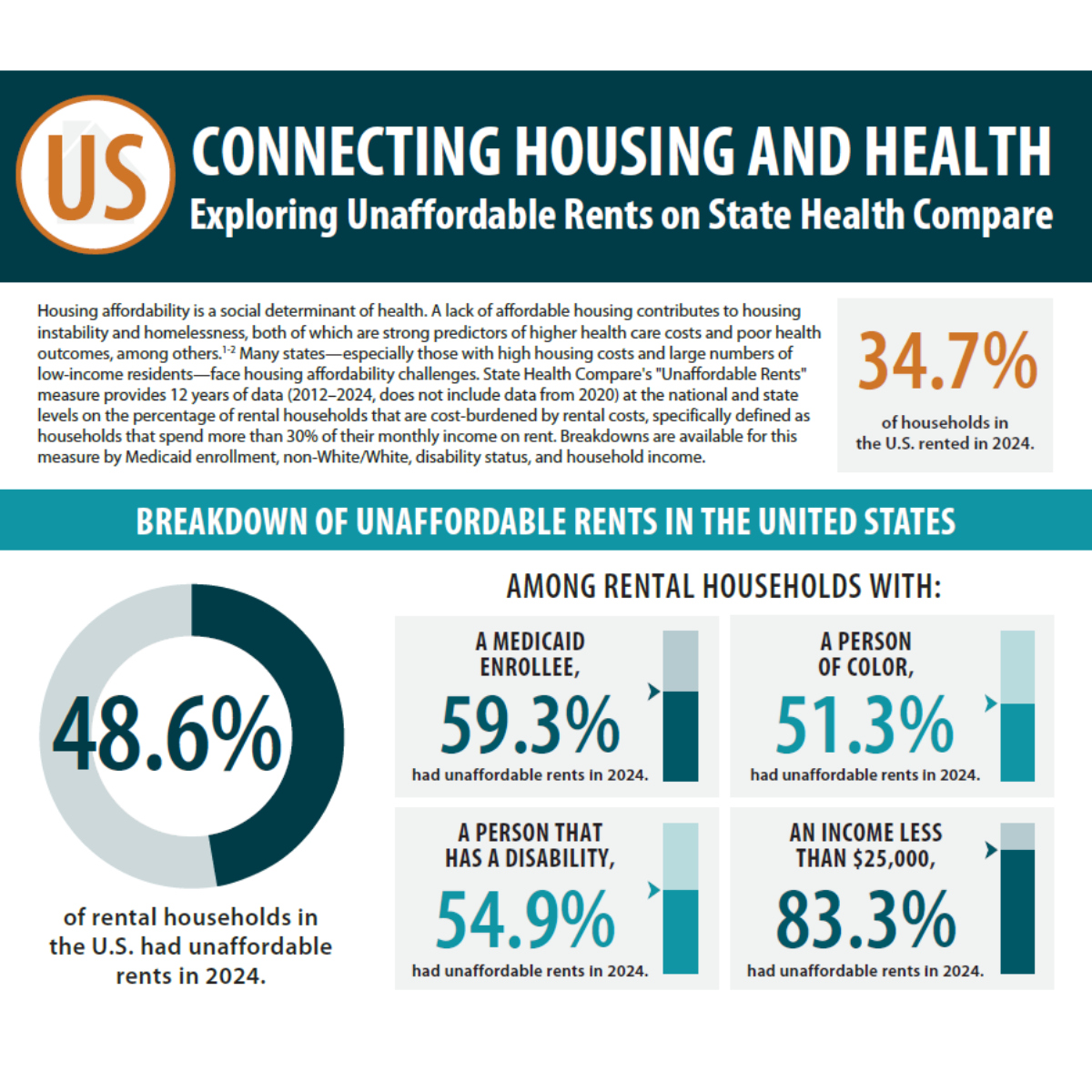
Housing Affordability Matters: Measuring and Addressing the Burden of Unaffordable Rents
A series of infographics examines housing affordability, specifically the percent of rental households that spend more than 30% of their monthly income on rent. Infographics are available for the overall U.S. population and for the five states with the highest percentages of unaffordable rents among rental households that had a Medicaid enrollee.
Choosing Between Federal Surveys That Measure Rent Affordability
SHADAC produced a technical brief that compares four surveys that can be used to measure unaffordable rents: the American Community Survey (ACS), the Survey of Income and Program Participation (SIPP), the American Housing Survey (AHS), and the Behavioral Risk Factor Surveillance System (BRFSS).