
Generate customized graphics using this data by selecting one of the options below.
Related Products
.png)
Unaffordable Health Care Costs: More U.S. Adults Forgo Care Due to Cost in 2024, Differences Seen by State, Insurance Coverage Type, Chronic Disease Status
Exploring trends in forgone care can help us understand how unaffordable health care costs impact the nation overall as well as different states, communities, and demographic groups. This blog will explore rates of forgone care due to cost over time, by state, and by subgroup using State Health Compare.
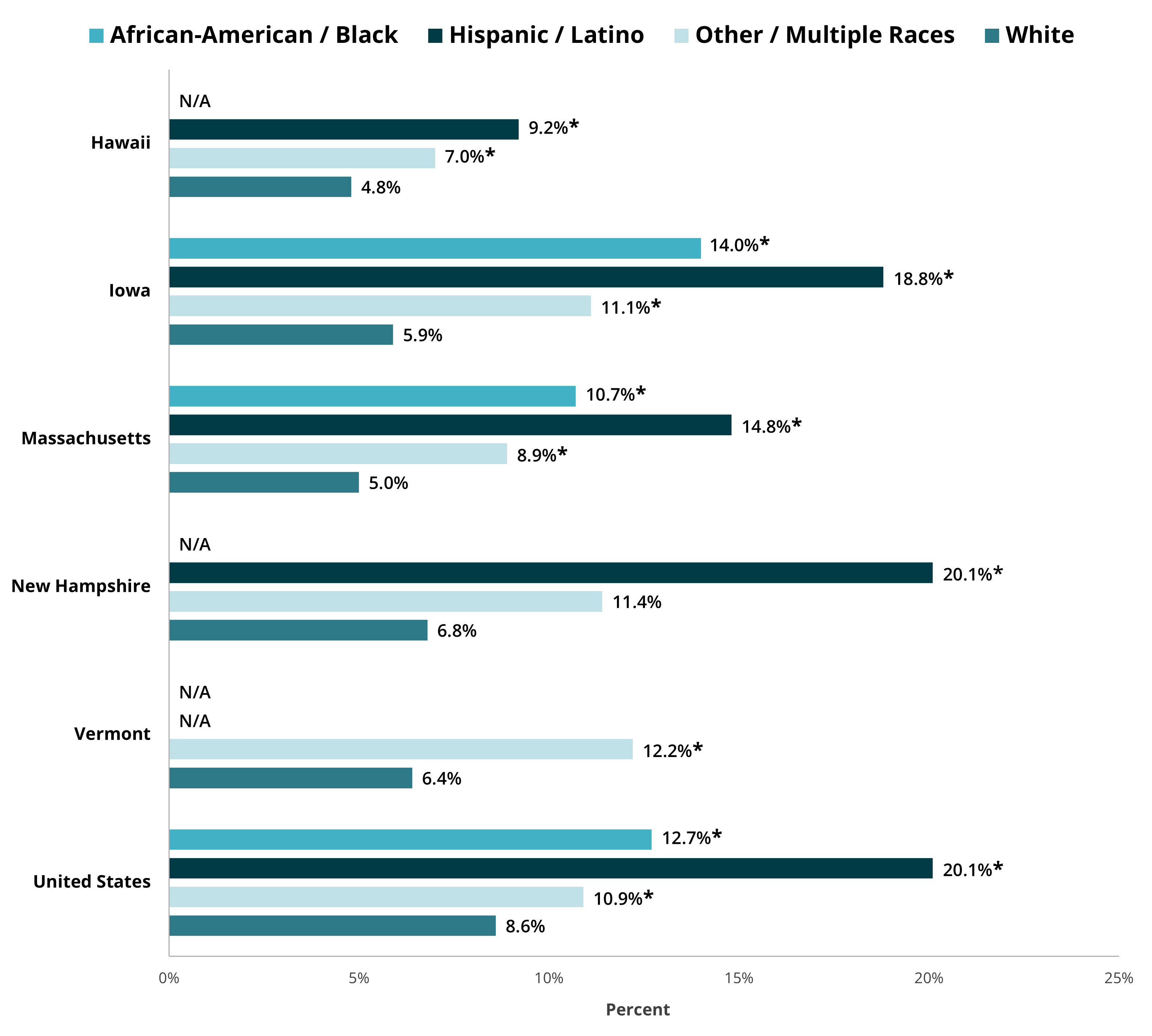
Exploring Racial Disparities in Forgone Health Care Using State Health Compare
In this blog post, we are going to explore racial disparities in forgone health care due to cost. Using SHADAC’s State Health Compare tool, we will examine forgone care data broken down by race and ethnicity. Then, we will explore racial disparities in forgone care at the state level.