
Generate customized graphics using this data by selecting one of the options below.
Related Products
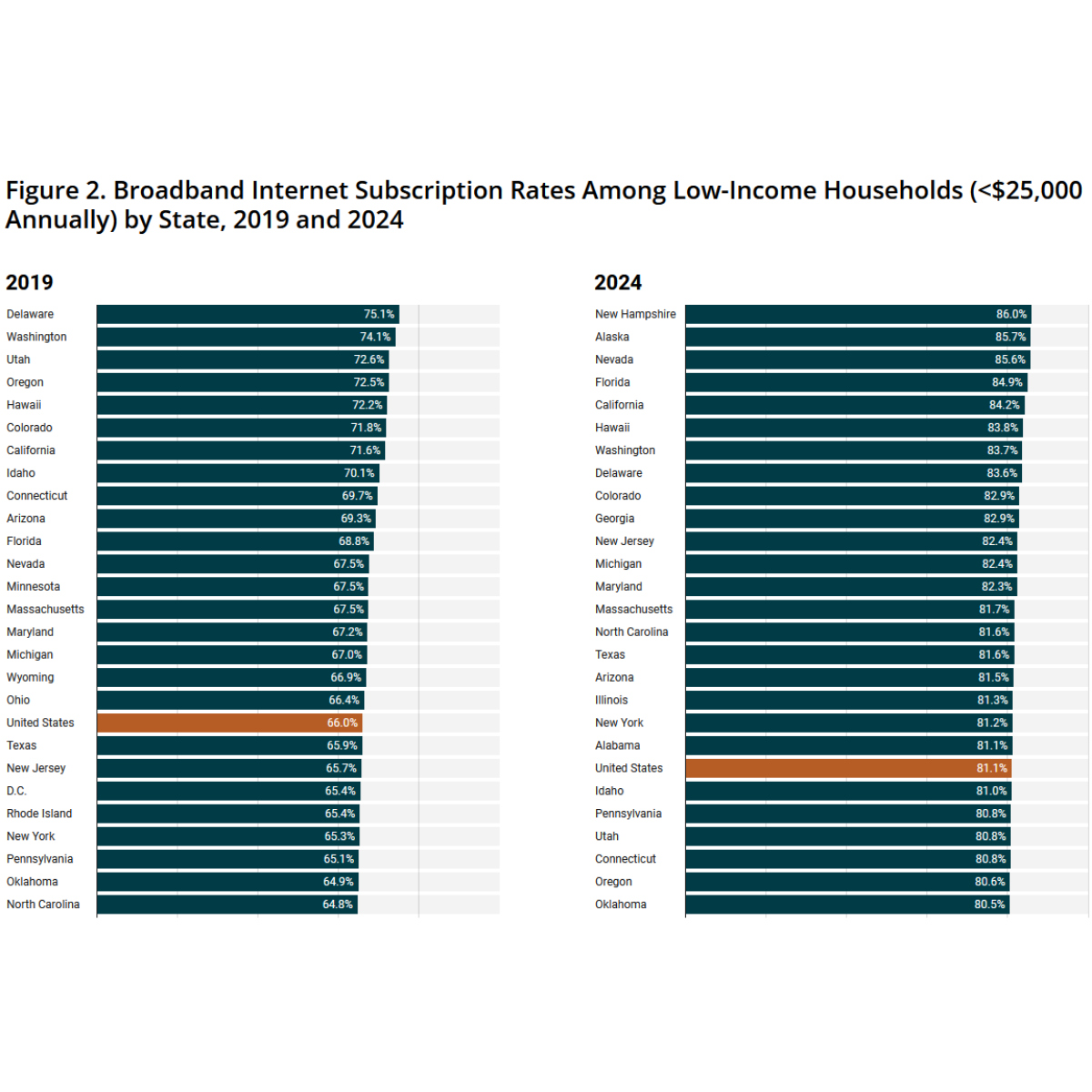
Broadband Expansion and the Digital Divide: Has There Been Progress in Expanding Access to Low-Income Households in the U.S.?
The COVID-19 pandemic underscored the importance of telehealth services and the crucial role of broadband internet subscriptions in making those services possible. In this blog, we look at variation in states’ progress on improving the share of households with home broadband internet services between 2019 and 2024 before taking a deeper look at disparities by income.

What Is Telehealth vs Telemedicine vs Telecare? Differences, History, and the Impact of COVID-19
Since the COVID-19 pandemic, telehealth use has exploded. But what is “telehealth”? And is it different from “telemedicine” and “telecare,” terms which are often used interchangeably? In this blog, SHADAC experts will explain the definitions of telehealth vs telemedicine vs telecare and the impacts of the COVID-19 pandemic on its utilization. We also discuss some of the benefits and limitations of telemedicine as a method to improve access to care.