
Generate customized graphics using this data by selecting one of the options below.
Related Products
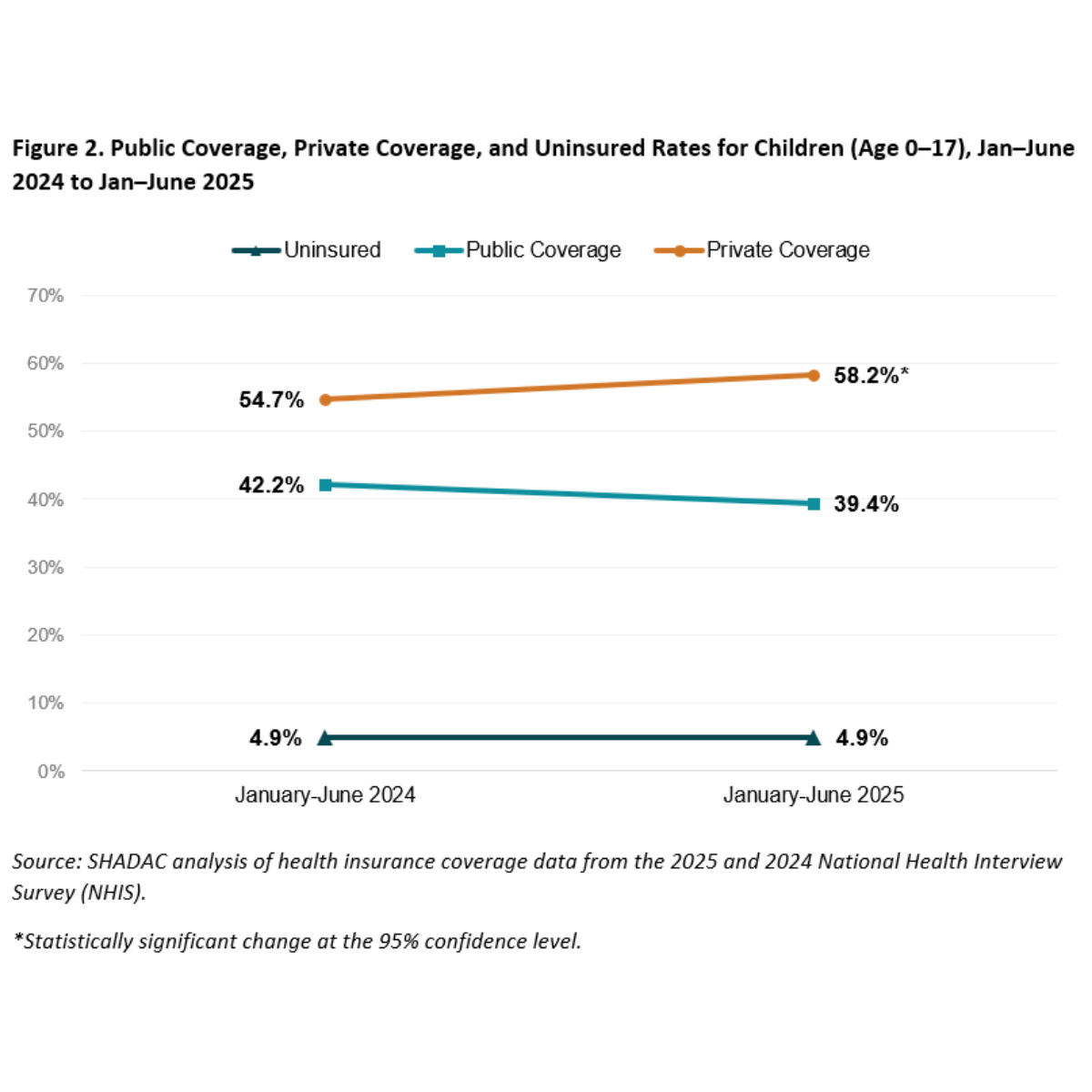
2025 NHIS Half-Year Health Insurance Estimates Early Release: While Coverage Holds Steady Overall, Private Coverage Increases and Public Coverage Decreases for Certain Groups
The uninsured rate as measured by the NHIS for all people was 8.2% during the first half of 2025—a rate that is statistically unchanged from 7.9% in the first half of 2024. Rates of public and private insurance coverage were also statistically unchanged between these two time periods. Learn more in full blog.
.png)
Unaffordable Health Care Costs: More U.S. Adults Forgo Care Due to Cost in 2024, Differences Seen by State, Insurance Coverage Type, Chronic Disease Status
Exploring trends in forgone care can help us understand how unaffordable health care costs impact the nation overall as well as different states, communities, and demographic groups. This blog will explore rates of forgone care due to cost over time, by state, and by subgroup using State Health Compare.