Percent who visited an emergency department in the past year
Measure Overview
Emergency department (ED) visits are costly and, in many cases, preventable when the patient’s health condition could have been treated in a non-emergency setting or avoided altogether if the patient had received adequate preventive care prior to the ED visit. Preventable ED visits may indicate poor access to a usual source of medical care (like a personal doctor), limited understanding about the health care system, lack of health insurance, or inadequate care management.
Understanding how many people visit the emergency department each year by monitoring trends in ED visits across different regions and populations can help policymakers and public health practitioners compare rates of ED utilization and investigate the underlying reasons for higher rates among certain groups.
Had Emergency Department Visit by State, Coverage Type, and More: Breakdowns and Data Source
State Health Compare provides state-level estimates of the percent of individuals who had any visit to the emergency department during the past twelve months using data from the National Health Interview Survey (NHIS).
Two breakdowns are available for this measure: Age and Coverage Type.
Generate customized graphics using this data by selecting one of the options below.
Related Products
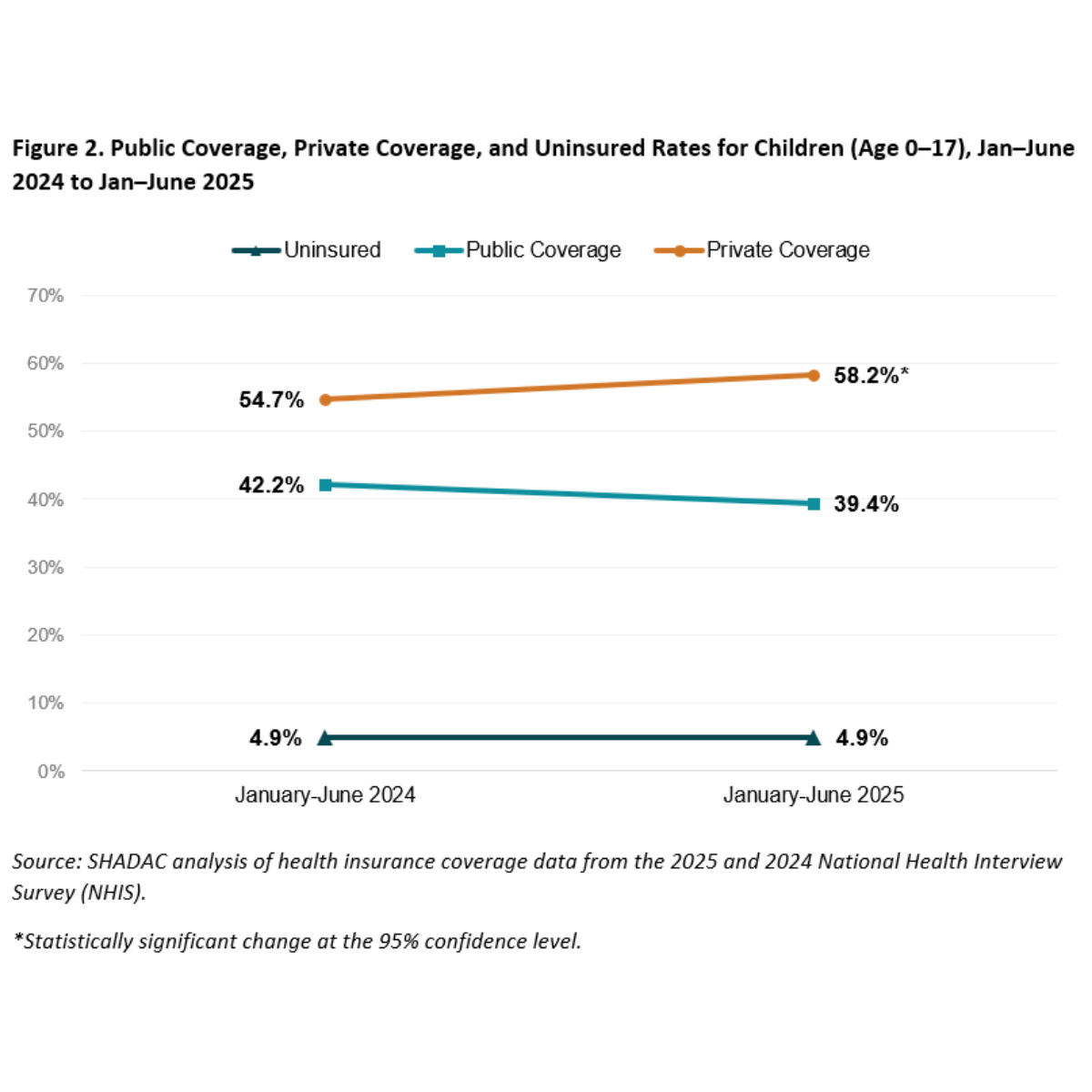
2025 NHIS Half-Year Health Insurance Estimates Early Release: While Coverage Holds Steady Overall, Private Coverage Increases and Public Coverage Decreases for Certain Groups
The uninsured rate as measured by the NHIS for all people was 8.2% during the first half of 2025—a rate that is statistically unchanged from 7.9% in the first half of 2024. Rates of public and private insurance coverage were also statistically unchanged between these two time periods. Learn more in full blog.
Unaffordable Health Care Costs: More U.S. Adults Forgo Care Due to Cost in 2024, Differences Seen by State, Insurance Coverage Type, Chronic Disease Status
Exploring trends in forgone care can help us understand how unaffordable health care costs impact the nation overall as well as different states, communities, and demographic groups. This blog will explore rates of forgone care due to cost over time, by state, and by subgroup using State Health Compare.