
Generate customized graphics using this data by selecting one of the options below.
Related Product
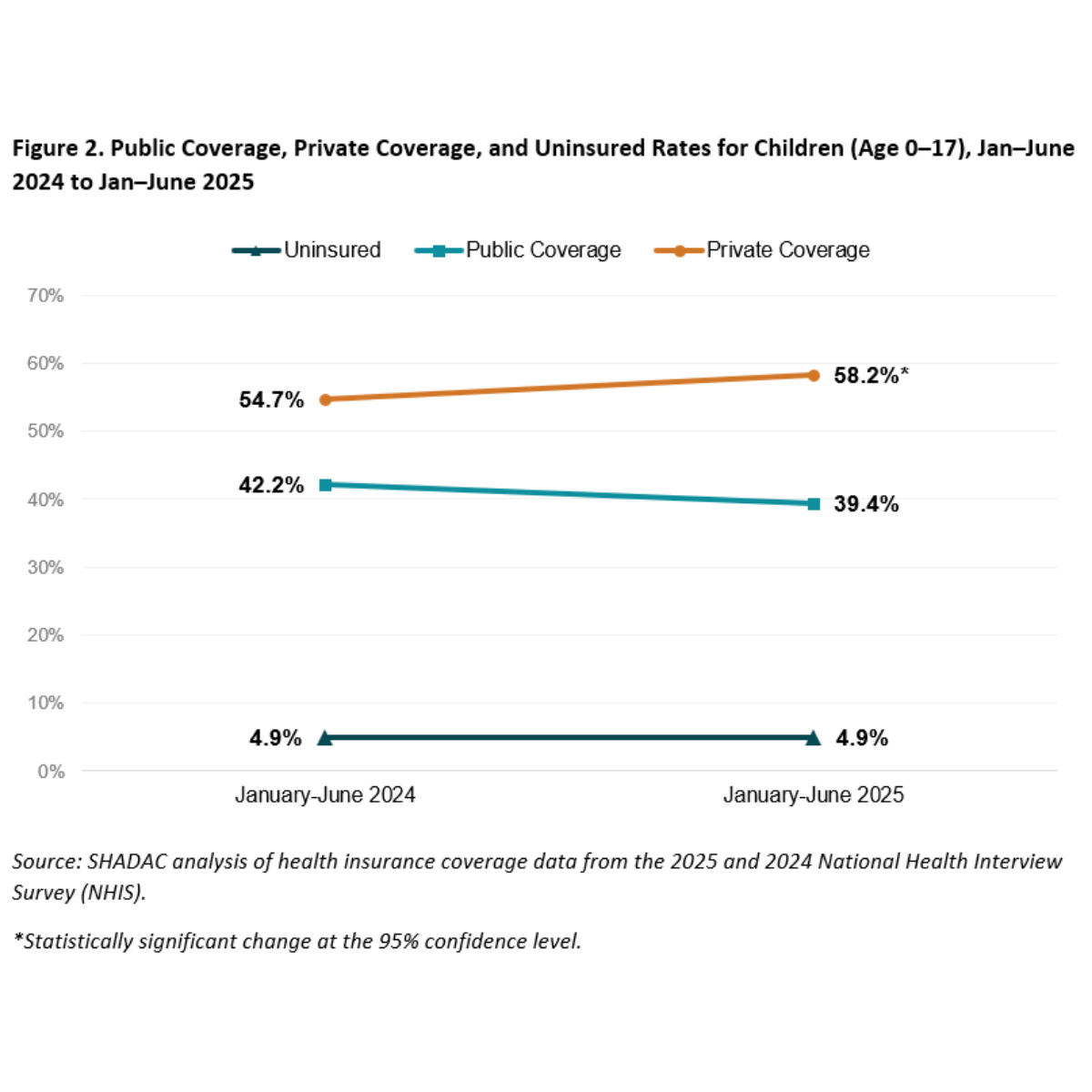
2025 NHIS Half-Year Health Insurance Estimates Early Release: While Coverage Holds Steady Overall, Private Coverage Increases and Public Coverage Decreases for Certain Groups
The uninsured rate as measured by the NHIS for all people was 8.2% during the first half of 2025—a rate that is statistically unchanged from 7.9% in the first half of 2024. Rates of public and private insurance coverage were also statistically unchanged between these two time periods. Learn more in full blog.
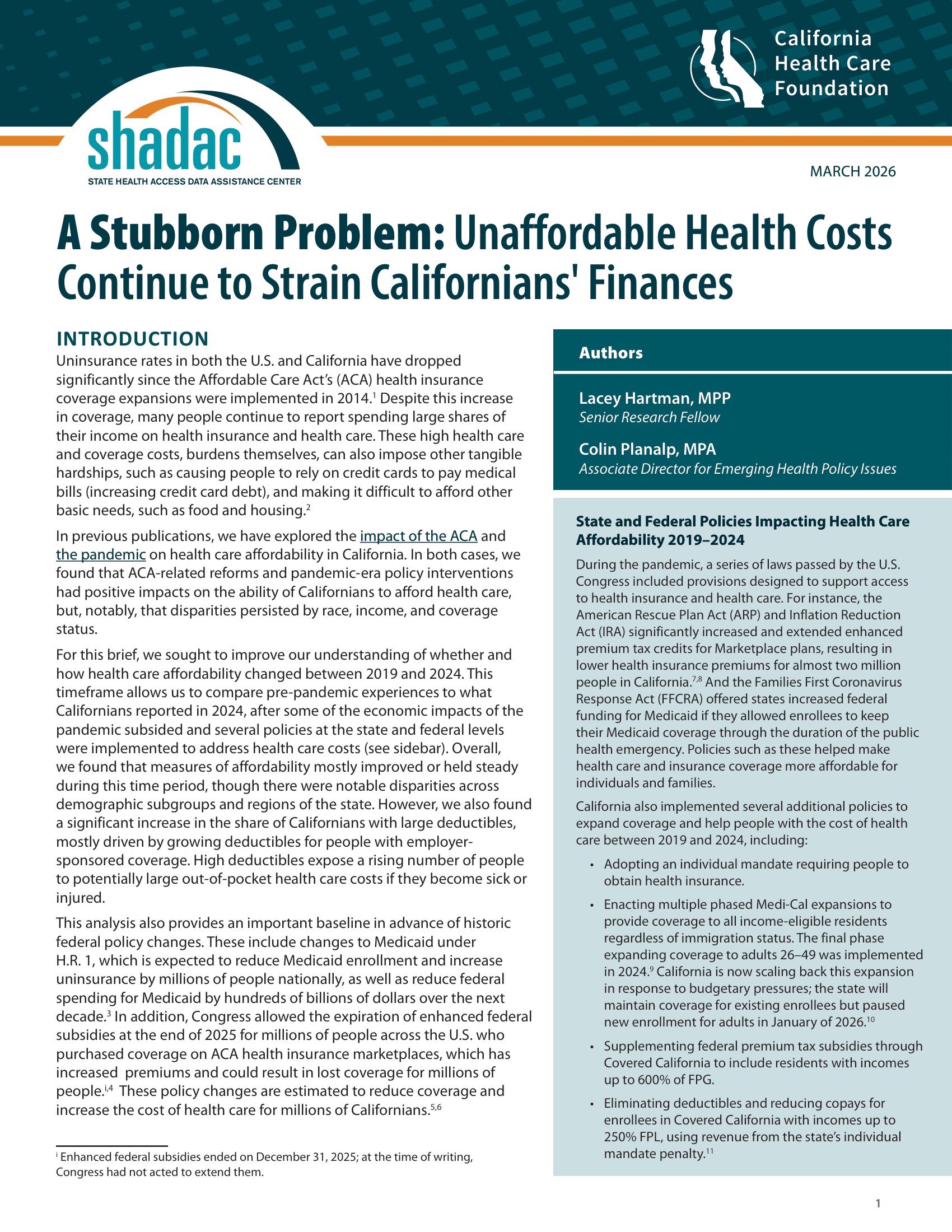
California Health Care Costs: New SHADAC and CHCF Brief Explores Health Care Affordability from 2019–2024, Growing Share of Californians Have Large Deductibles
In this brief for the California Health Care Foundation (CHCF), we use California Health Interview Survey (CHIS) data to better understand health care costs in California, including whether and how affordability may have changed between 2019 and 2024. We also use Current Population Survey (CPS) data in order to compare health care costs and affordability measures in California to the United States to see how those in California experience health care costs compared to the nation as a whole.