Percent who saw or talked to a mental health professional in the past year
Measure Overview
The National Institute of Mental Health estimates that more than one in five adults live with a mental illness in the United States. Numerous studies have consistently linked poor mental health with a number of negative health outcomes, including strong links to chronic disease, increased risk of substance use and abuse, and increased risk of death by suicide.
Studies show that when individuals are able to see or talk to mental health professionals, like psychologists, psychiatrists, and clinical social workers, it can help with treating a variety of mental health conditions. But how many people in the U.S. utilize mental health care?
Saw Mental Health Professional by State, Age, and More: Breakdowns and Data Source
State Health Compare provides state-level estimates of the percent of individuals who saw or talked to a mental health professional in the past year using data from the National Health Interview Survey (NHIS).
Two breakdowns are available for this measure: Age and Coverage Type.
Generate customized graphics using this data by selecting one of the options below.
Related Products
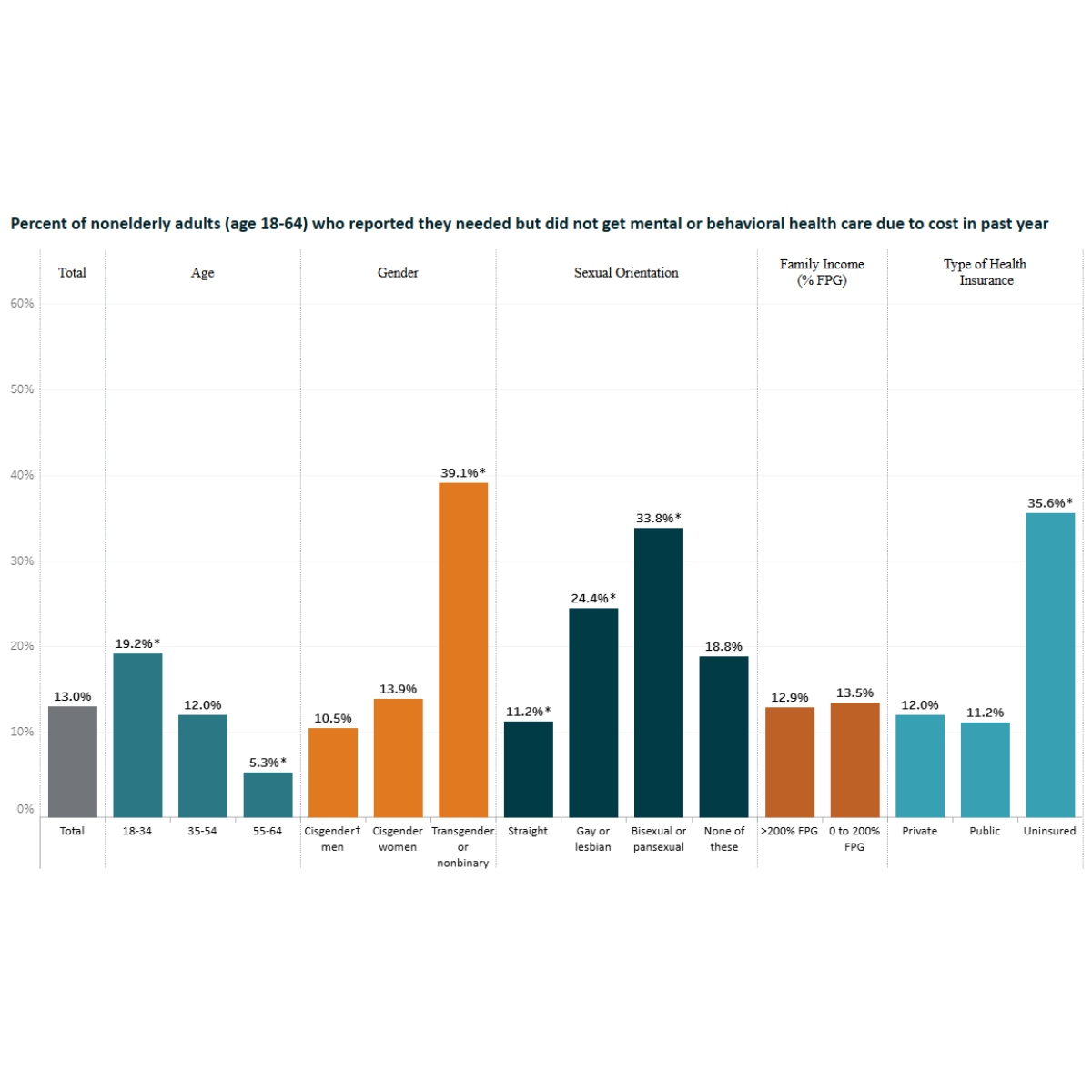
Access to Affordable Mental Health Care in Minnesota: Study Shows Many Adults Experiencing Frequent Mentally Unhealthy Days and Facing Cost Barriers to Mental Health Care
Population health surveys such as the Minnesota Health Access Survey (MNHA) can provide information about health-related quality of life. Using the ‘Healthy/Unhealthy Days’ survey measures developed by the Centers for Disease Control (CDC) together with questions about health care affordability, this survey data can provide us with a snapshot of Minnesotans’ experiences with mental health and access to mental health care.
Mental Health Data and Resources from SHADAC and Beyond
In this blog, SHADAC has compiled a number of mental health resources and data sources. First, we review some mental health survey data sources you could consider using for your own research. Then, we review a sample of blogs, publications, and resources on mental health from researchers at SHADAC and beyond.