
Generate customized graphics using this data by selecting one of the options below.
Related Products
April 2026—Updated Health Data Sets on State Health Compare: Explore Public Health Statistics and Health Data Visualizations
SHADAC’s public health research fellows and analysts consistently update measures on State Health Compare (SHC) in order to provide users with the most up-to-date available data. In this post, we will review the health data sets and measures that have been updated since our 2025 measure update blog, including a short explanation of the measure and its data source.
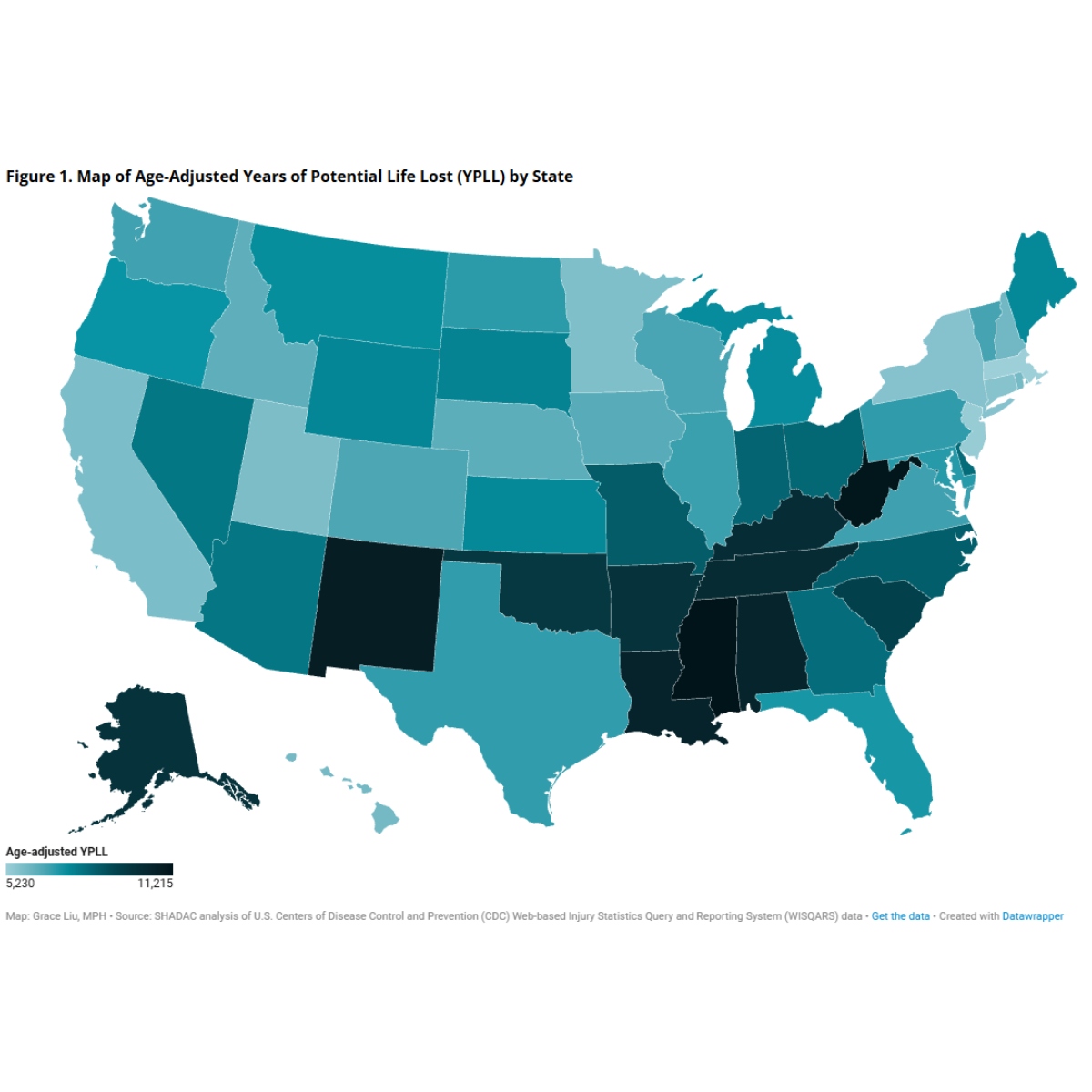
Lost Years: Using Premature Deaths Data to Understand Public Health Trends and Subgroup Variation
Data on premature deaths—a measure quantifying mortality that occurs prior to average life expectancy—is an important public health measure. In this blog, we continue in our discussion of premature deaths, describing examples of what preventable deaths data can tell us about public health trends and variation in premature deaths across demographic subgroups.