
Generate customized graphics using this data by selecting one of the options below.
Related Products
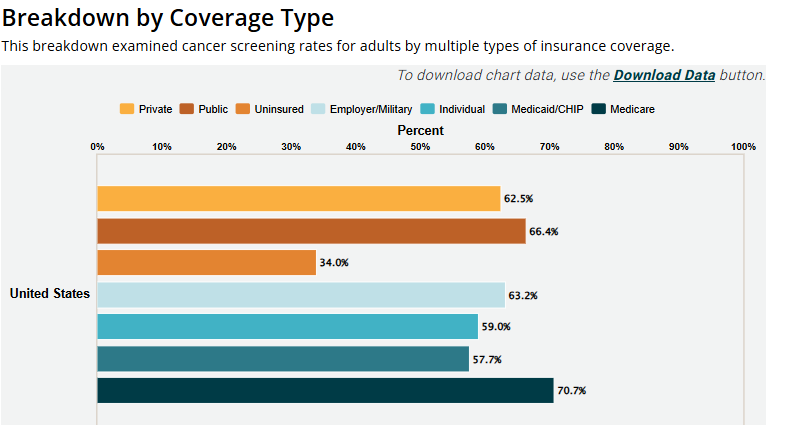
Cancer Screening Data: Adults Who Have Received Recommended Cancer Screenings by Coverage Type, Education Level, and Race/Ethnicity in 2022
In this blog post, SHADAC researchers delve into the breakdowns between the different groups to understand disparities and/or differences of cancer screening rates for various populations. For this analysis, we used data from the 2022 Behavioral Risk Factor Surveillance System (BRFSS) on State Health Compare.
Updated Health Data Sets on State Health Compare: Explore Health Statistics and Health Data Visualizations
SHADAC’s public health research fellows and analysts consistently update measures on State Health Compare (SHC) in order to provide users with the most up-to-data available data. In this post, we will review the health data sets and measures that have been updated since our last measure update blog, including a short explanation of the measure and its data source.